Guru, sadhu and sastra
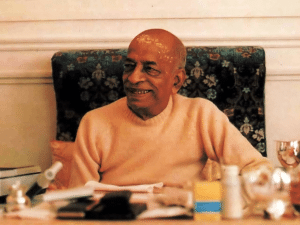
Visakha Devi Dasi: Yadubara had to return to Calcutta while I continued traveling with the small group that accompanied Prabhupada. Before we parted, Yadubara told me, “I really wanted to go with you but there're just too many things I have to do.”
“So we can meet up later when you're done?”
“Yeah, we should be able to meet in Calcutta.” With that assurance, I'd gone on to Madras, our next stop, where Giriraja had organized a pandal program. Now the South Indian tropical weather replaced the cold dryness of the north, the curvy sounds of Tamil replaced Hindis coarseness, urad dahl and rice combinations—idlis, dosas and vadas, served with spicy coconut chutney—replaced whole-wheat chapatis and mung bean soup. The gradually and gracefully bulging temple spires of the north were replaced by the south’s huge gabled roofs covered with ornate, colorful bas-reliefs of gods and goddesses on the temple domes. Even the South Indians had a different quality about them—more settled and patient.
Mr. K. K. Balu hosted us in his home for our weeklong stay. A typically squat, slick-haired, pious businessman, Mr. Balu, always dressed in black pants and a starched white business shirt open at the collar, was a courteous if flamboyant host. Daily he drew a thin black vertical line in the center of his forehead, from the bridge of his nose to his hairline. I'd seen a few people in Vrindavana with the same mark and hadn't known what to make of it. One afternoon Prabhupada asked Balu, “Why do you wear that line on your forehead? Such a mark is not mentioned in any scripture.”
“My guru asked me to wear this mark,” Balu said.
“He may ask...” Prabhupada said, “...but it must be confirmed in the scriptures.”
Prabhupada was respectful yet piercing. He spoke to Balu as a professor would speak to a student during lunch - they were comrades in negotiating life’s questions, but Prabhupada knew more; he was wiser.
“I follow my guru blindly," Balu said.
“No, no. What the guru says must be confirmed by the great saintly persons and the scriptures: guru, sadhu (holy person), and scripture. The guru cannot say anything that is not confirmed. If he does, then he is not a guru."
“I know nothing but the words of my guru."
Our host wouldn't budge. I worried that Prabhupada’s challenge had disturbed him, but it hadn't. He left the room with a contented look. Prabhupada explained to the few of us remaining that guru, sadhu, and scripture were an invincible triumvirate, an ongoing litmus test for life choices that would keep spiritual seekers secure on their path. The guru-sadhu-scriptures, I understood, were a kind of communion with the inner strength of the tradition and civilization to which I now belonged, an inner strength that was indestructible.
I was not well educated in the guru-sadhu-scripture wisdom that Prabhupada consistently used to analyze and evaluate. In Balu’s blind following of his guru, I saw myself blindly following Prabhupada, and that made me uncomfortable. My ignorance weighed on me. I didn’t know enough to measure the quality of my guru. Neither did I know enough to know what to do and what not to do in my spiritual life. If I could learn, I'd become a responsible follower. I'd have a standard measuring stick, a solid basis for discernment. Yet I was a little surprised to realize that I wasn’t worried that Prabhupada might be bogus. He’s already won my heart. And the fact that he wanted us to question, to weigh what he said against the words of sadhu and scripture, to become knowledgeable and perceptive, made me feel protected. Prabhupada's openness to examination evoked my trust and helped assuage my pesky and lingering doubts about my life choice. Prabhupada, I felt, was not giving us “his” wisdom, just wisdom.